Seasonal Event Cycles in Browser-Based Simulations and Their Impact on Player Engagement Metrics Across Time Zones
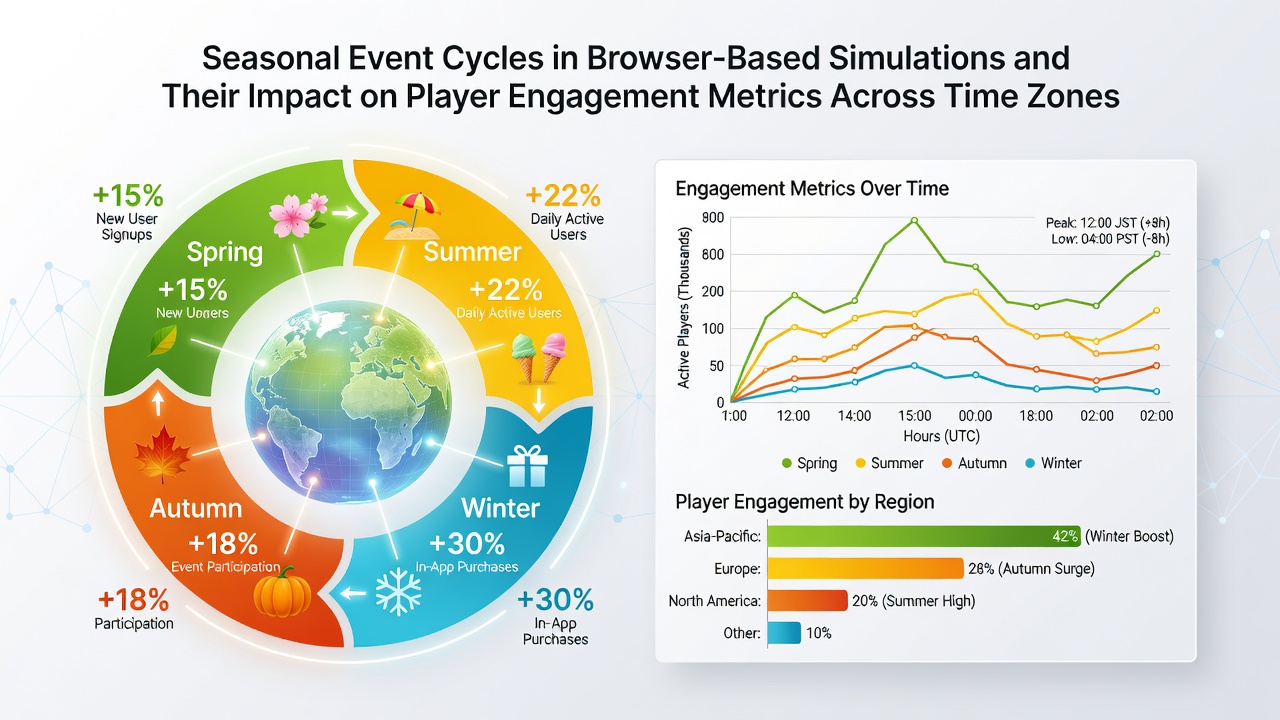
Browser-based simulations incorporate recurring seasonal event cycles that align with real-world holidays, weather patterns, and cultural milestones, and these cycles produce measurable shifts in player engagement metrics such as daily active users, session duration, and retention rates. Data collected from multiple platforms indicates that event-driven content updates trigger temporary increases in login frequency while players navigate time-zone-specific participation windows.
Core Mechanics of Seasonal Cycles
Developers structure these cycles around fixed calendar anchors including solstices, harvest festivals, and winter celebrations, then layer limited-time objectives that require repeated logins within defined periods. Research from academic gaming labs shows that event windows typically span seven to twenty-one days, during which resource multipliers and exclusive items become available only to participants who complete daily or hourly tasks. Observers note that simulation titles refresh core loops by introducing weather-linked modifiers such as crop bonuses in summer events or heating costs during winter phases, and these changes create predictable spikes in resource management activity.
Engagement Metrics Under Seasonal Pressure
Analytics platforms tracking browser simulations record average session lengths extending by eighteen to thirty-four percent during peak event weeks compared with baseline periods. Retention figures for seven-day cohorts rise when events coincide with school holidays or public breaks, yet the same data reveals sharper drop-offs once the event concludes because players who joined solely for limited rewards often exit without sustained attachment to core progression systems. Industry reports compiled through 2025 and into mid-2026 demonstrate that global titles experience overlapping event calendars, which produces cumulative traffic surges when multiple simulations launch parallel summer festivals around July.
Time-Zone Variations in Participation Patterns
Engagement curves diverge sharply across longitude bands because event timers remain synchronized to a single server clock while player populations operate on local schedules. Users in East Asian time zones frequently complete morning objectives before European players begin their evening sessions, and this staggered access produces secondary peaks in leaderboard activity that shift westward each hour. Figures released by international analytics providers indicate that North American evening logins capture the largest share of global event completions during July 2026 harvest events, whereas Australian and New Zealand cohorts register higher midday participation rates due to alignment with local school schedules. Cross-time-zone synchronization tools such as shared global timers and region-specific notification windows help mitigate participation gaps, although latency differences still influence real-time competitive elements embedded in many simulations.
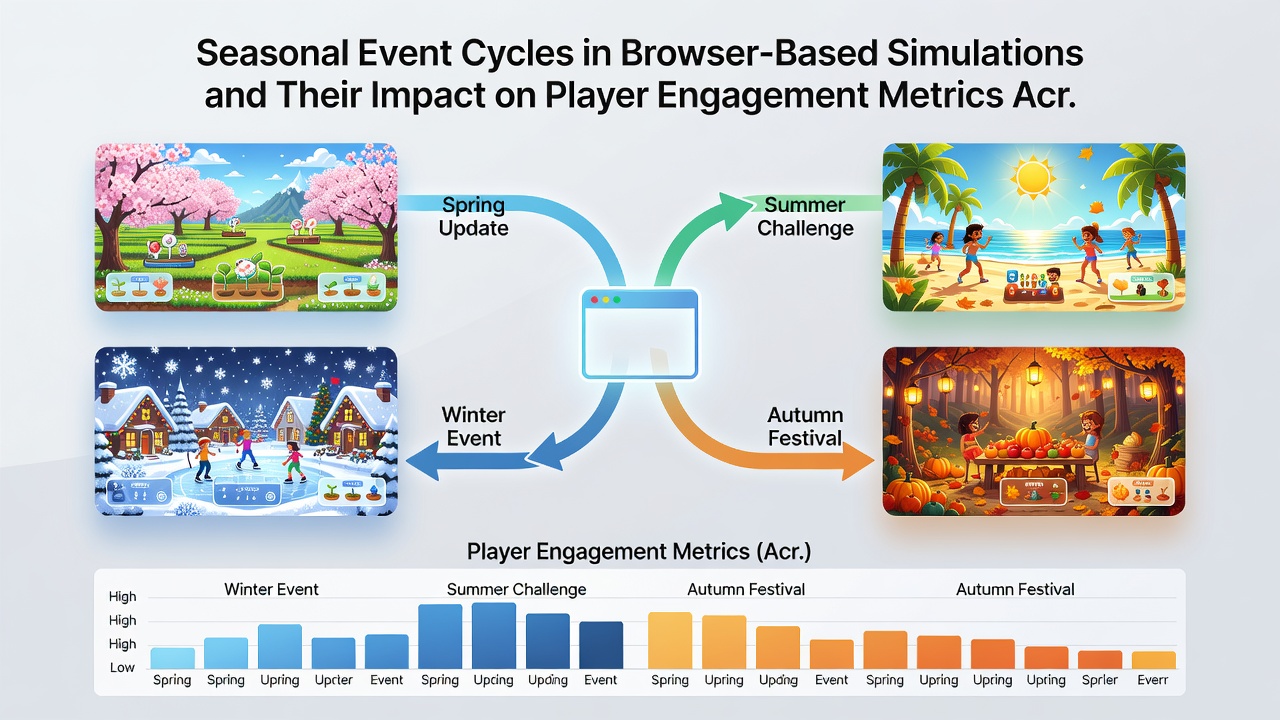
Studies conducted by university research groups in Canada and Australia track how daylight saving transitions alter these patterns, showing that abrupt clock changes can compress or expand effective event windows by up to two hours for affected populations. When an event timer lands at 03:00 local time for Pacific Rim users, completion rates drop measurably compared with the same timer occurring at 20:00 for European participants.
Longitudinal Data and Platform Comparisons
Longitudinal datasets spanning three years reveal that seasonal events consistently outperform non-event periods in both acquisition and monetization metrics, with in-game purchase volumes rising twenty-two percent on average during limited-time cosmetic releases. Platform operators observe that browser-based titles benefit from lower friction entry points, allowing time-zone-displaced players to join mid-event without download barriers. Reports from the Entertainment Software Association document parallel trends across web and mobile simulation categories, while research published by the Interactive Games & Entertainment Association highlights similar retention dynamics in Oceania markets during southern hemisphere seasonal alignments.
Conclusion
Seasonal event cycles in browser-based simulations generate repeatable, time-zone-dependent fluctuations in engagement metrics that developers monitor through aggregated login and progression data. Continued observation through 2026 shows these patterns remain stable across successive calendar years, with platform operators adjusting timer placements and notification strategies to accommodate global player distributions. The resulting datasets provide clear benchmarks for predicting participation levels during upcoming holiday windows.